

Italian language levels from A1 to C2
You do not need to know the name of your level before you contact us. Tell us what you already understand, when you last studied Italian and what you would like to do with the language. The short placement on your first Monday helps us confirm the most suitable group.
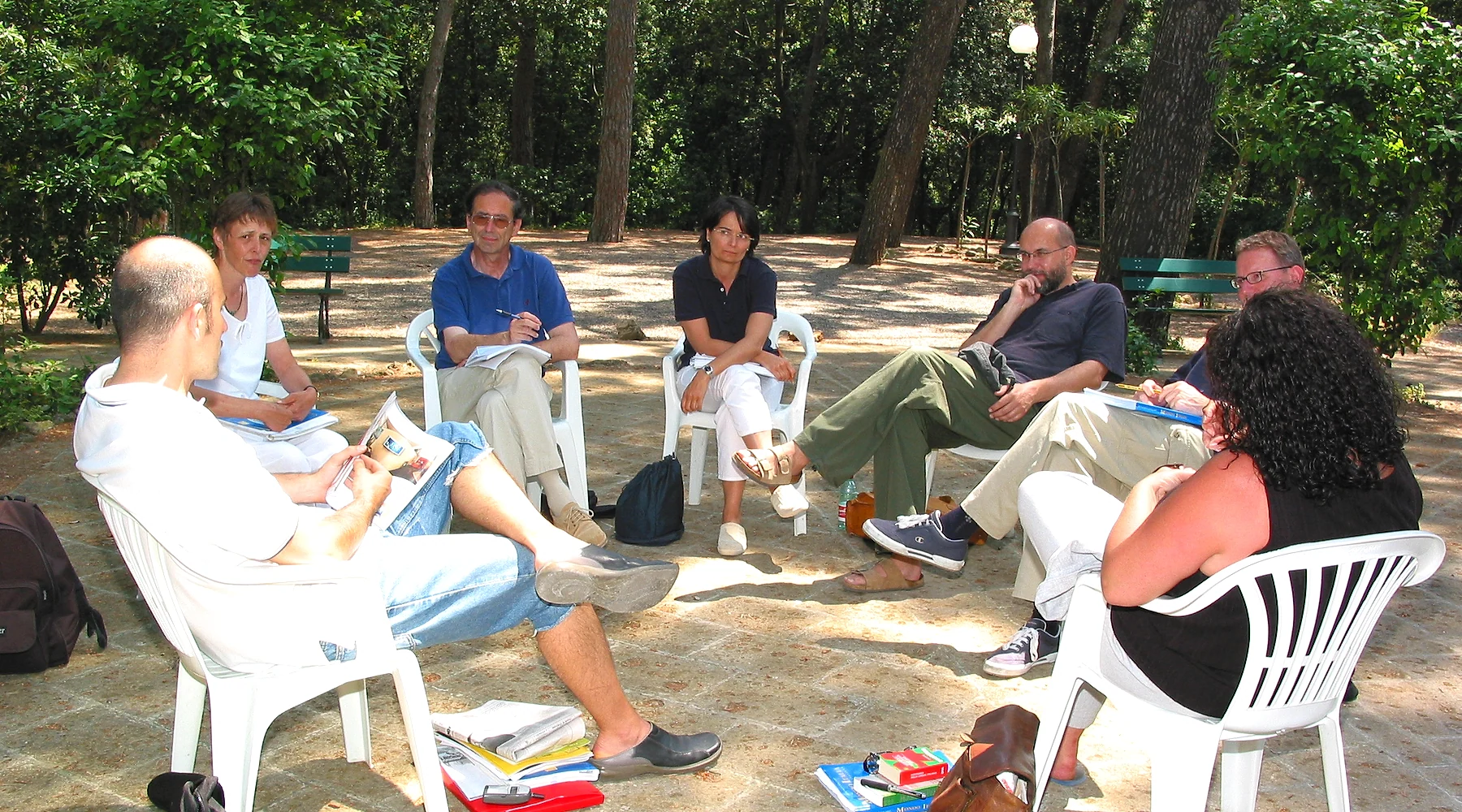
Your level is a starting point, not a judgement
The Common European Framework of Reference for Languages, usually shortened to CEFR, describes six broad levels from A1 to C2. It looks at what you can do with a language, not simply how many grammar chapters you have completed.
Most learners do not have exactly the same level in every skill. You may understand a conversation but hesitate when answering, or read confidently while finding fast speech difficult. That mixed profile is normal and useful information for placement.

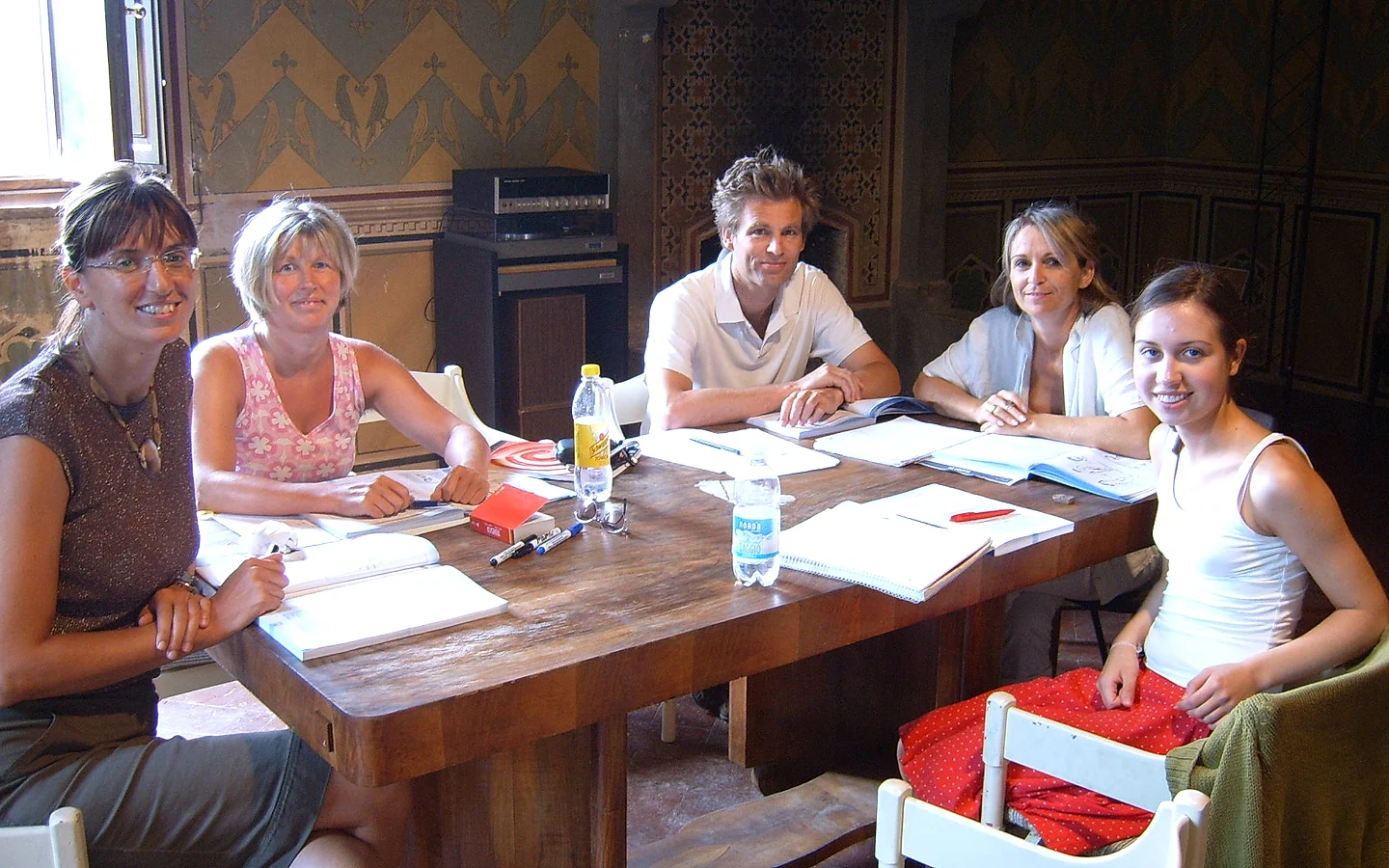

What Italian can feel like at each stage
These examples are an everyday orientation, not a test and not a copy of the official CEFR grid.
You build the language for familiar people, places and everyday needs.
You can introduce yourself, understand very familiar words and use short phrases for a coffee, a number, a time or a simple request when the other person helps.
You can manage short exchanges about family, shopping, directions, meals and your day. You still need repetition, but you can connect several simple sentences.
You can take part in more varied conversations and explain what matters to you.
You understand the main points of familiar topics, describe experiences and plans and cope with many situations while travelling, even when you need time to find a word.
You can discuss a wide range of subjects, explain a viewpoint and follow longer conversations. Interaction with Italian speakers becomes more spontaneous.
You understand nuance and adapt your Italian to demanding personal, cultural or professional situations.
You understand long and demanding material, express ideas fluently and choose language that suits social, academic or professional contexts.
You can understand almost everything heard or read, bring information together and express fine shades of meaning with ease and precision.
Speaking, listening, reading and writing may tell different stories
When you describe your level, think about situations rather than a single score. The following questions are often more useful than saying “intermediate”.
- Can you follow a slow face-to-face conversation?
- What happens when several Italians speak together?
- Do films, radio or station announcements feel familiar?
- Can you answer without preparing every sentence?
- Can you describe a past experience or future plan?
- Which situations make you switch to another language?
- Can you understand messages, menus or news articles?
- Can you write a short personal message?
- Do you need a dictionary for every sentence or only occasionally?
A short conversation helps us confirm the group
If you already know some Italian, come to the school at 08:45 on your first Monday. Placement normally takes little time and leads into the 09:00 course start.

- Tell us about your learning
Mention previous courses, time spent in Italy, certificates if relevant and the situations in which you currently use Italian.
- Complete a brief placement
A short conversation and a few questions or tasks help us hear what you already understand and use.
- Start with the suitable group
We place you with learners at a comparable overall level, subject to the groups available for your dates.
- Keep the conversation open
If the level feels unexpectedly easy or demanding, speak to the school so the situation can be considered.
Choose the way of learning as well as the level
Several learners with a comparable overall level practise together. Different partners and voices are part of the learning experience.
Good if you enjoy exchange and intensive mornings.See the group language courseThe lesson can focus more closely on uneven skills, a particular goal, professional language or a pace that suits you.
Good for an individual profile or additional support.See private Italian lessonsTwo people enroll together and learn with one teacher. Their Italian needs to be similar enough for both to benefit.
Good for partners, friends or colleagues at a comparable level.See two-to-one lessonsFive useful details for your first message
Read the Council of Europe introduction to the CEFR- 01
When and how long you last studied Italian
- 02
Whether you currently speak, read or hear Italian regularly
- 03
A situation you manage comfortably in Italian
- 04
A situation in which you still need help
- 05
Your dates and preferred course format
Questions about Italian levels and placement
What do A1, A2, B1, B2, C1 and C2 mean?
They are the six broad proficiency levels of the Common European Framework of Reference for Languages. They describe what learners can do when listening, reading, speaking and writing.
Do I have to know my Italian level before enrolling?
No. Describe your previous learning and what you can currently do. We can advise you, and the short placement on the first Monday confirms the suitable group.
Can I join as a complete beginner?
Yes. Tell us that you have no previous knowledge. We then check the suitable beginner option for your dates; private lessons may be an alternative when no matching group is available.
What happens during placement?
Placement is normally brief and may include a short conversation and a few questions or tasks. It is not a pass-or-fail examination; it helps the school understand what you can already use.
What if my speaking and grammar are at different levels?
That is common. Placement considers the overall profile rather than only one score. Tell us if you understand much more than you speak or if reading is easier than conversation.
Which course format suits my level?
A group language course gives you several speaking partners at a comparable overall level. Private lessons can follow an individual profile more closely. Two-to-one works when two people enroll together with similar knowledge.