

San Gimignano: towers, frescoes and Tuscan views
San Gimignano’s skyline looks almost impossible, but the best part of a visit happens at street level. Stone lanes open into Piazza della Cisterna and Piazza del Duomo, frescoes turn quiet interiors into vivid stories, and the countryside appears at the end of an alley. Give the town a full day from Castiglioncello and enough unhurried time to notice the lived-in place behind the postcard.
Why San Gimignano is worth a leisurely day
The skyline is the invitation. What makes the visit memorable is the relationship between towers, public squares, painted interiors and the agricultural landscape just beyond the walls.
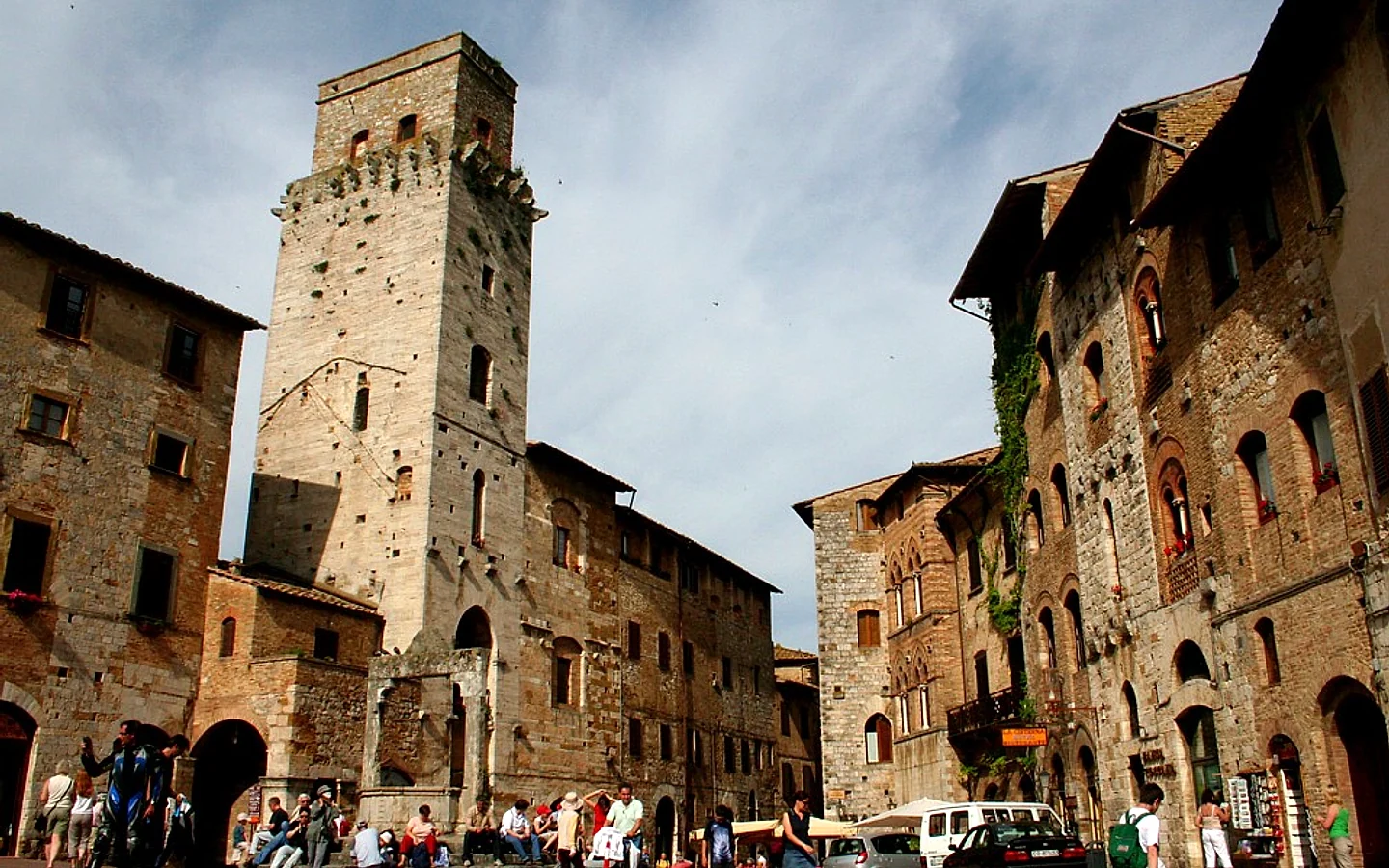
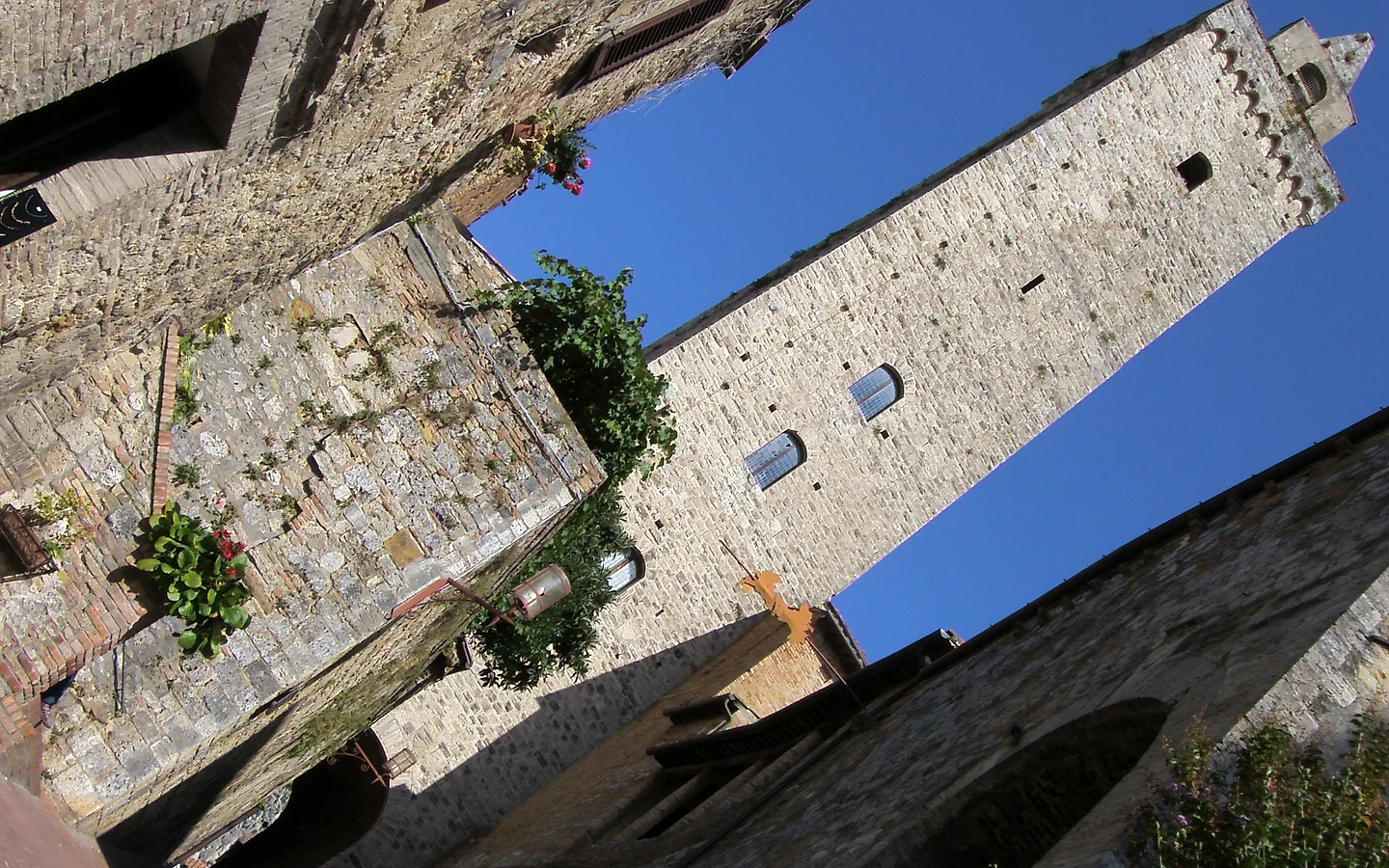
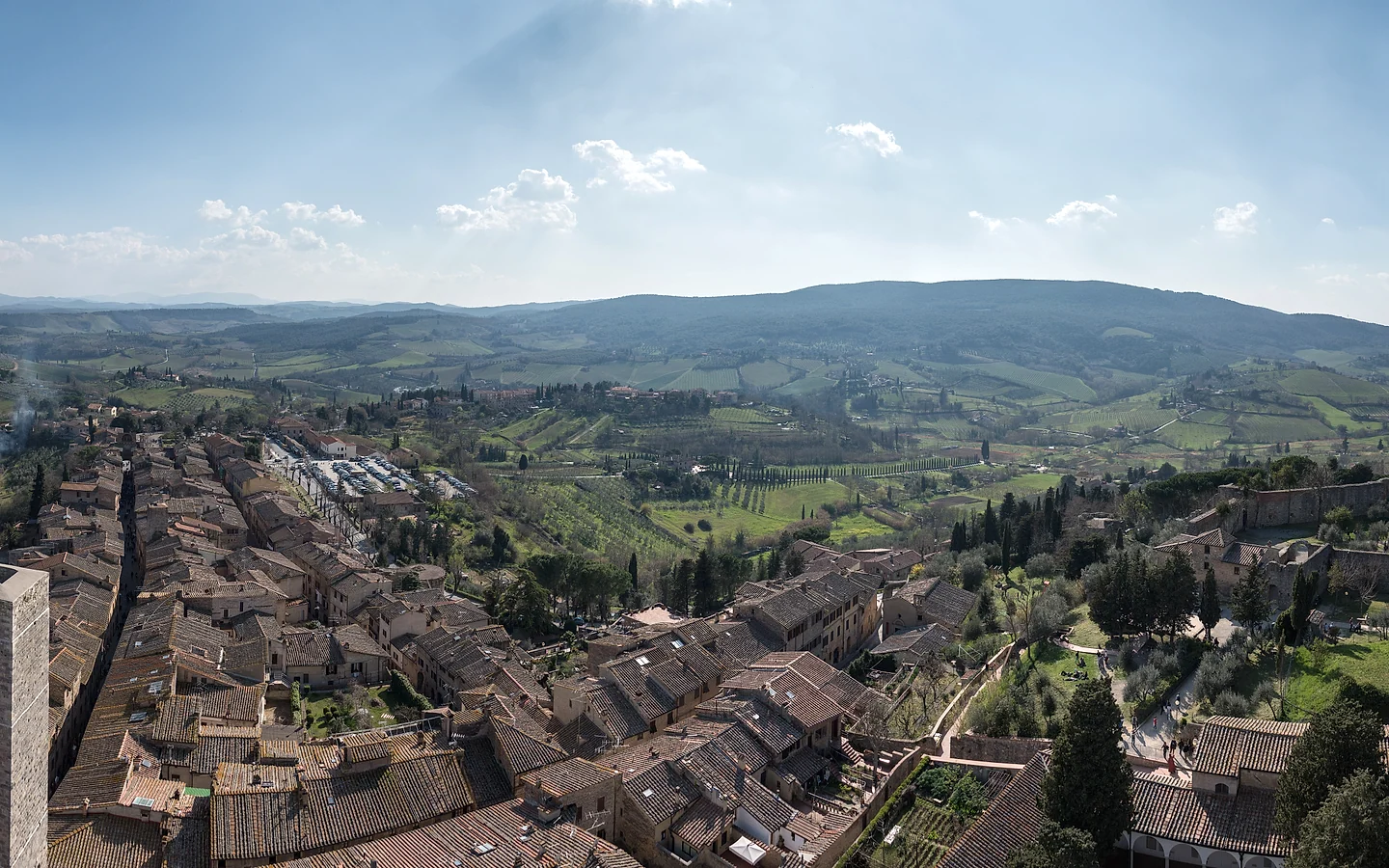
San Gimignano’s surviving towers were tied to family power and status. From the lanes they feel vertical and severe; from a viewpoint they become a compact skyline set against fields and vineyards.
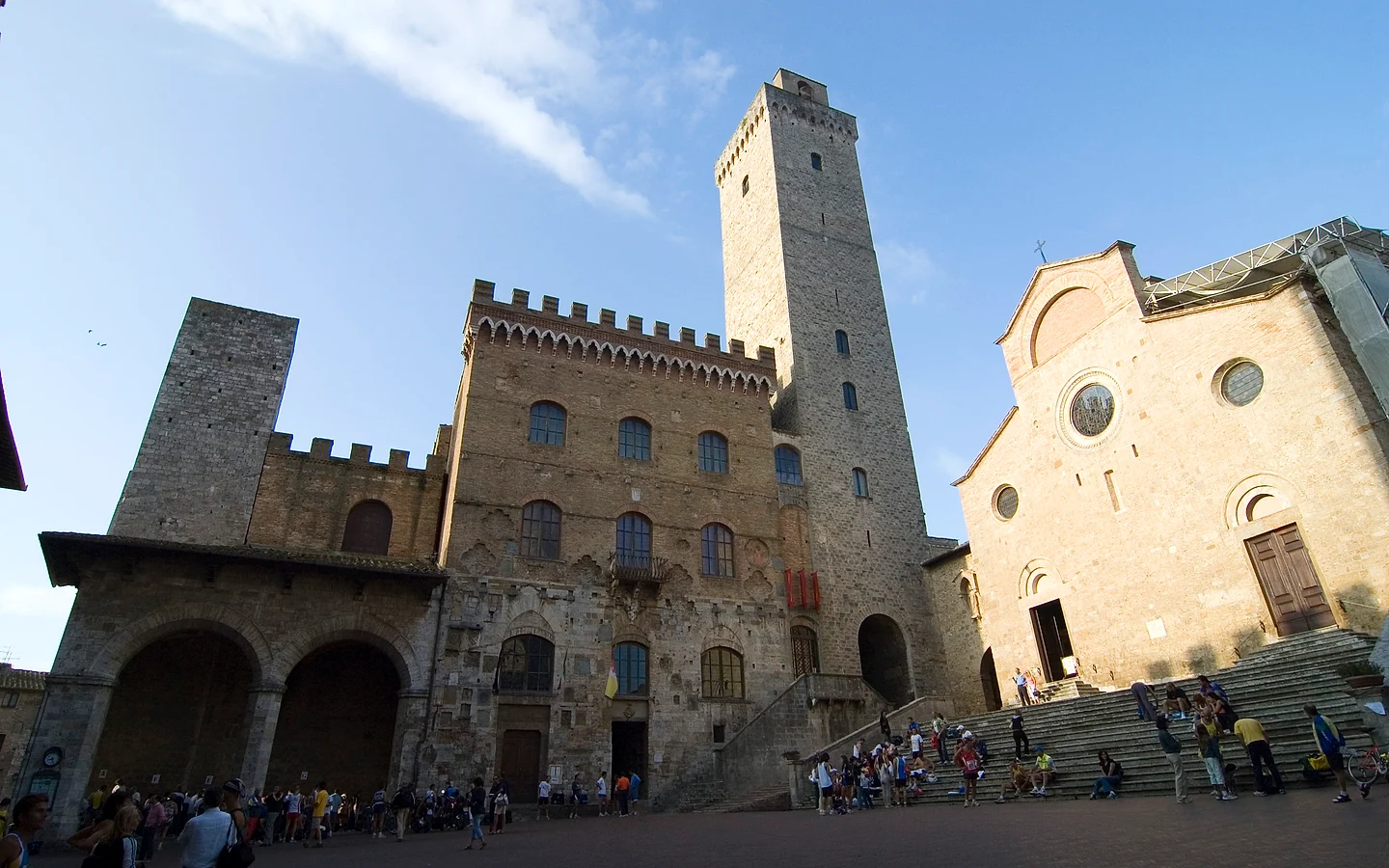
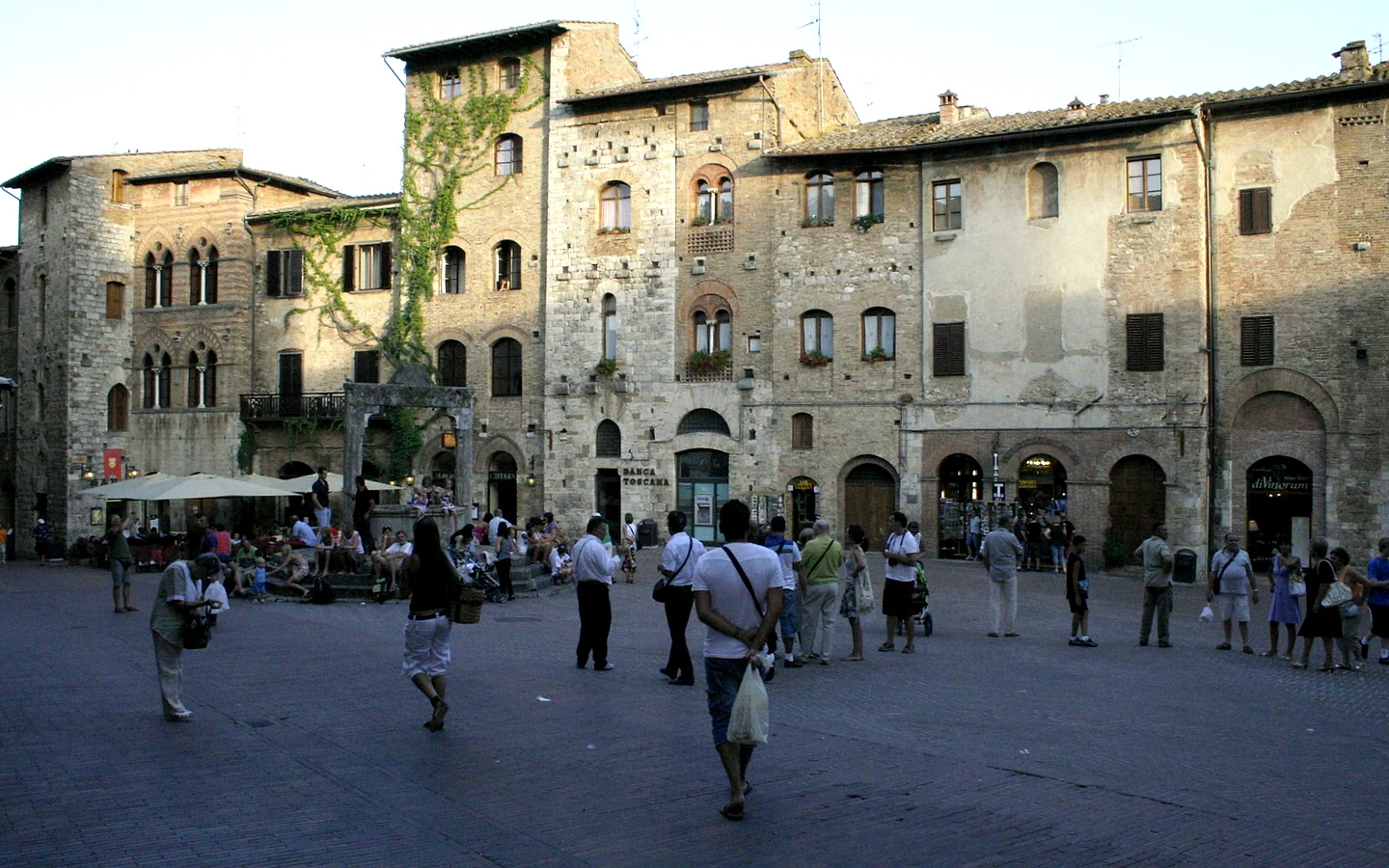
Piazza della Cisterna is irregular, social and shaped around the well. Piazza del Duomo feels more ceremonial, with church, town hall and towers facing one another at close range.
The Collegiata’s painted cycles and the collections of the civic museums add depth beyond the architecture. Choose a focused visit and use the official sites for current tickets, openings and access conditions.
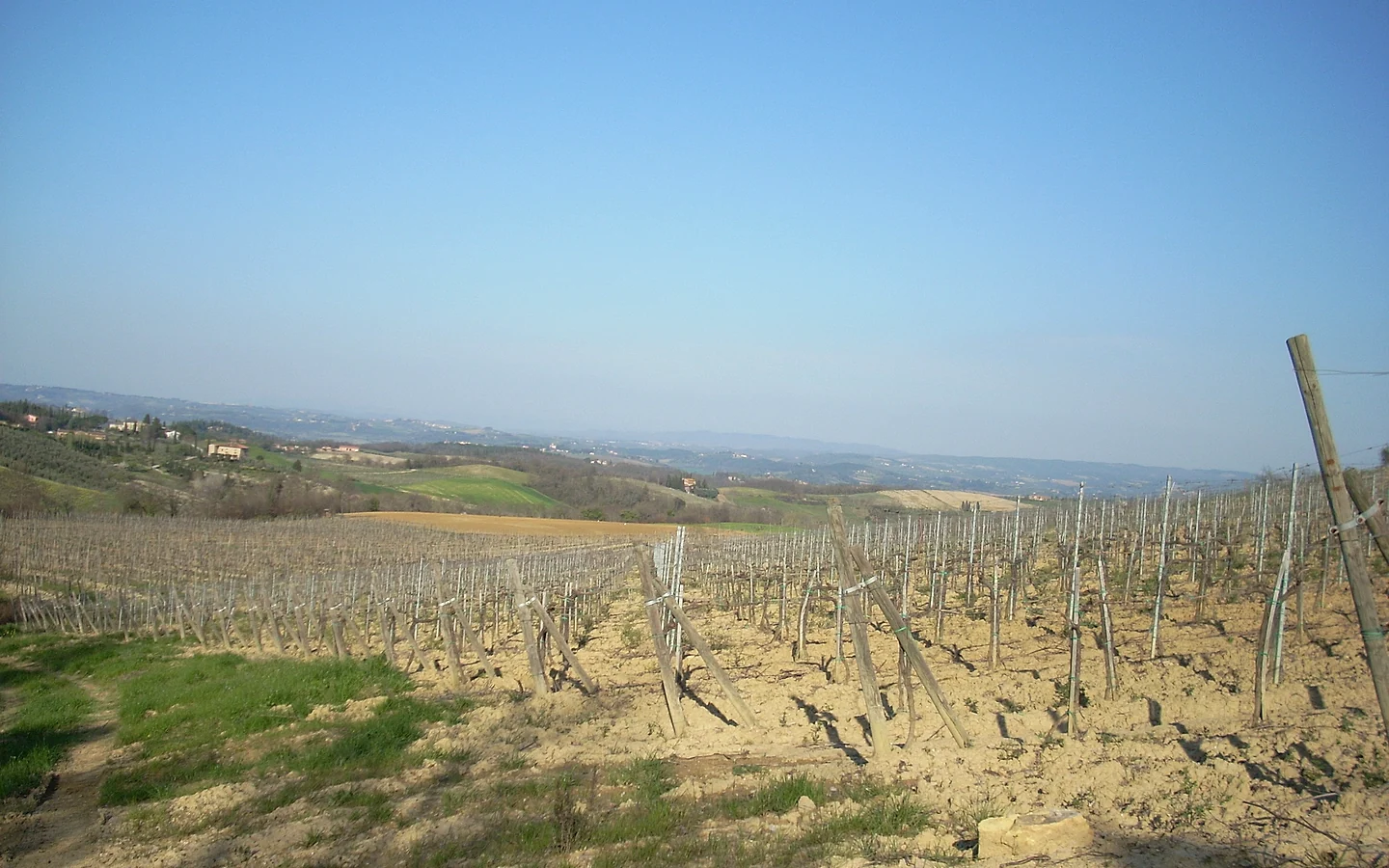
Local wine and saffron connect the town to its land, while the Via Francigena places San Gimignano on a much older route of movement through Tuscany. Food and landscape are part of the history, not an afterthought.
A full San Gimignano day without turning it into a checklist
The town is compact, but its lanes, interiors and viewpoints are better without hurry. Arrive before the strongest midday flow, choose one ticketed visit and let the squares and quieter edges shape the rest of the day.
- 01Enter through a gate and let the towers appear
From Porta San Giovanni or the northern approach, walk rather than rushing directly to the central squares. Via San Giovanni introduces shops, stone houses and changing tower views; side openings reveal the countryside. The historic centre has been on the UNESCO World Heritage List since 1990, yet its scale is still understandable on foot.
- 02Read Piazza della Cisterna and Piazza del Duomo together
The triangular Piazza della Cisterna grew around its central well and is the natural place to watch people arrive. A few steps away, Piazza del Duomo gathers the Collegiata, Palazzo Comunale and towers into a more formal civic space. Walk the edges, look back through the connecting passage and notice how a very small urban area creates two distinct public rooms.
- 03Choose your principal interior or climb
Torre Grossa rises about 54 metres above Palazzo Comunale and gives the defining view over roofs, towers and Val d’Elsa, but the climb requires stairs and may be affected by weather or capacity. The Collegiata offers a completely different reward: extensive fresco cycles that turn biblical stories into detailed medieval scenes. Decide according to your interests, mobility and the current official opening calendar instead of squeezing both into a hurried hour.
- 04Make lunch or gelato part of the town
San Gimignano can be busy and visitor-oriented, so step away from the first menu board, read what is actually offered and ask about a local dish, saffron product or seasonal ingredient. A gelato in Piazza della Cisterna is popular for a reason, but the pleasure comes from sitting long enough to see the square change rather than from collecting a famous shop name.
- 05Finish at the Rocca, walls or a quieter lane
The Rocca di Montestaffoli and viewpoints along the edge of town open the day toward vineyards and rolling hills. This is also the right moment to understand Vernaccia di San Gimignano as a wine connected to the surrounding landscape. If the centre was crowded at midday, return through side streets or the squares later, when tour groups begin to thin and the stone takes on warmer light.
Use the Italian from class without making it feel like homework
A day trip gives you many small reasons to speak: understanding a ticket, asking which tower you can see, choosing food or checking the bus back to Poggibonsi. Keep the exchanges simple, specific and friendly.
In a bakery, cafe or small food shop, ask which item is typical of San Gimignano and whether it is sweet, savoury or seasonal. One precise question usually creates a more natural exchange than asking for the best thing in town.
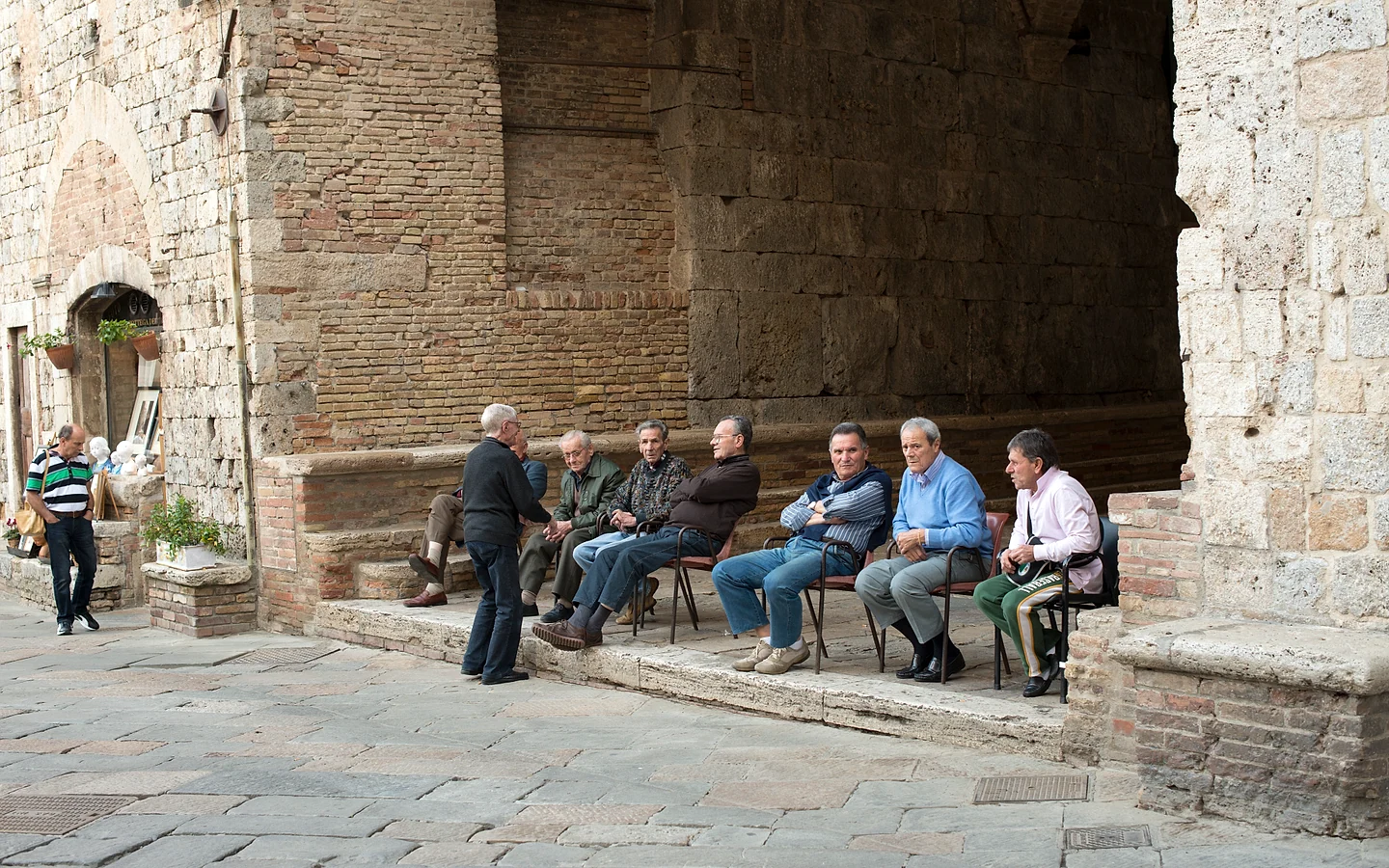
Residents still meet, shop and talk in a centre seen by many visitors. Leave doorways clear, lower your voice in residential lanes and observe before photographing people. Credibility comes from treating the place as a community, not a backdrop.
From a tower or wall, try describing colours, distances and what lies in front of or behind the town. It connects vocabulary from the Italian language course with a place you will remember.
If you are not driving, ask for a local Vernaccia and compare what you taste with the landscape around town. If you are driving, choose an alcohol-free option, share a small tasting only with a designated driver or buy a bottle for later.
Keep San Gimignano for a course-free day. A car is the easiest option from Castiglioncello and especially sensible when two or more people travel together, but the combination of regional train to Poggibonsi and bus 130 is a useful alternative when its outward and return times fit. Do not treat the town as a quick tower photograph between two other cities. Walk both main squares, choose Torre Grossa and Palazzo Comunale or the Collegiata frescoes as your principal visit, have a relaxed local break and finish with the walls, Rocca or a quieter side street overlooking the countryside.
Road values use current route tools and exclude traffic and parking. Recheck the official parking and camera-controlled ZTL rules, visitor information, opening hours, trains and bus 130 for the actual visit.
Choose the journey that suits your day
Car, train and local buses can all be useful. Choose the route that leaves time for the places you look forward to and a comfortable journey back.
Driving gives you the most control over a long day from Castiglioncello. San Gimignano’s historic centre is protected by a camera-controlled ZTL, so the correct destination is an official public car park, never a central piazza or hotel address chosen blindly by the satnav. P1 Giubileo lies south of the centre and is usually the lower-cost choice; P2 Montemaggio is close to Porta San Giovanni, while P3 and P4 Bagnaia approach the northern side.
- Open the live route from Villa Casa Marina and check traffic before leaving, especially around the main inland roads.
- Choose P1, P2, P3 or P4 before departure and enter the car-park destination directly into navigation.
- Stop at every ZTL sign or camera-controlled entrance unless you have confirmed a specific authorisation.
- Photograph the car-park name and level, then allow for slopes and the walk through the gate into the centre.
San Gimignano has no railway station. The useful rail destination is Poggibonsi-San Gimignano, normally reached from Castiglioncello by regional trains with at least one change. The station name can be misleading: you are still roughly 13 kilometres from San Gimignano and need the connecting bus. This route works when planned as one complete chain rather than as a train journey with an improvised final leg.
- Search Castiglioncello to Poggibonsi-San Gimignano for the actual travel date and examine every change.
- Match the arrival in Poggibonsi with a current bus 130 departure toward San Gimignano.
- Plan the return bus and return train before buying a timed museum or tower ticket.
- Leave enough connection time in Poggibonsi because a missed bus can remove a large part of the day.
Autolinee Toscane line 130 links Poggibonsi FS with San Gimignano and serves central arrival points such as Porta San Giovanni and Piazzale Montemaggio. It is the practical public-transport bridge between the railway and the hill town. Timetables vary by day and season, so the last useful return matters as much as the outward connection.
- Open the current line 130 timetable and select the direction from Poggibonsi FS to San Gimignano.
- Check whether Porta San Giovanni or Piazzale Montemaggio best suits your planned first stop.
- Confirm the ticket method and validate the ticket according to current Autolinee Toscane instructions.
- Save the return departure and reach the stop early; do not rely on a generic search result or an old timetable image.
What to know before you set off
A successful day needs only a few firm decisions: the route, the correct car park or public-transport chain, one priority inside the walls and a return with enough margin.
P1 Giubileo, P2 Montemaggio, P3 Bagnaia Superiore and P4 Bagnaia Inferiore serve different approaches to the historic centre. Compare location, walking route, current capacity and current tariff on the municipal parking page before choosing.
The municipality uses camera-controlled access rules around the historic centre. Ordinary day visitors should leave the car outside the walls. A navigation shortcut, an open gate or another car entering is not evidence that you may drive through.
Comfortable shoes, water and sun protection matter. The centre is compact but not flat, tower visits add stairs, and polished or uneven stone can be tiring. Build short pauses into the day rather than waiting until everyone is exhausted.
San Gimignano is one of Tuscany’s best-known hill towns. Arriving earlier, eating slightly outside the busiest lunch window and revisiting the main squares later can make the same day feel calmer without pretending the town will be empty.
Opening hours and access for Torre Grossa, Palazzo Comunale and the Collegiata vary. Public-transport visitors should secure the last sensible bus to Poggibonsi before choosing a timed entry; drivers should allow for the walk back to the selected car park.
Questions about this day trip: San Gimignano
Practical answers for planning independently from Castiglioncello.
Can I visit San Gimignano after morning Italian lessons?
We do not recommend it. The drive is about one and a half hours each way before traffic and parking, while public transport requires a train-and-bus chain. Keep it for a full course-free day.
Is San Gimignano better by car or public transport from Castiglioncello?
A car is normally the easiest choice and particularly practical for two or more people. Public transport is possible by regional train to Poggibonsi-San Gimignano and Autolinee Toscane bus 130, provided you plan both connections and the last useful return.
Does San Gimignano have a railway station?
No. Poggibonsi-San Gimignano is the nearest useful railway station, about 13 kilometres away. From there you continue by bus 130 or another prearranged transfer.
Where should I park in San Gimignano?
Use one of the official car parks outside the historic centre: P1 Giubileo, P2 Montemaggio, P3 Bagnaia Superiore or P4 Bagnaia Inferiore. Choose the approach and tariff that suit your day, and check the municipal page before departure.
What should I see on a first visit?
Walk Piazza della Cisterna and Piazza del Duomo, then choose Torre Grossa and Palazzo Comunale or the frescoes of the Collegiata as your principal visit. Add a relaxed food stop and a viewpoint near the Rocca or town walls.
Should I book Torre Grossa or the Collegiata in advance?
Check the official museum and Collegiata websites for your exact date. Opening calendars, capacity, weather restrictions and ticket combinations can change, especially in busy periods. Reserve only when the official source recommends or requires it.
Who books transport and tickets?
You arrange the trip yourself and book directly with the transport operator, attraction or other provider. This page helps you prepare.