
Siena: the Campo, the Duomo and a city built to be walked
Siena feels coherent in a way few cities do. Brick streets slope toward the shell-shaped Piazza del Campo, neighbourhood symbols appear above doorways, and the striped marble of the Duomo arrives as a complete change of colour and scale. Come for the famous square, but give the city enough time to become more than a photograph: choose one major interior, walk through Contrada streets, sit down for lunch and notice how everyday life continues inside a remarkably intact medieval centre.
What you notice beyond Siena’s famous square
Architecture is the first impression, but civic art, neighbourhood identity, food and the city’s unusual shape are what make a full day feel coherent.
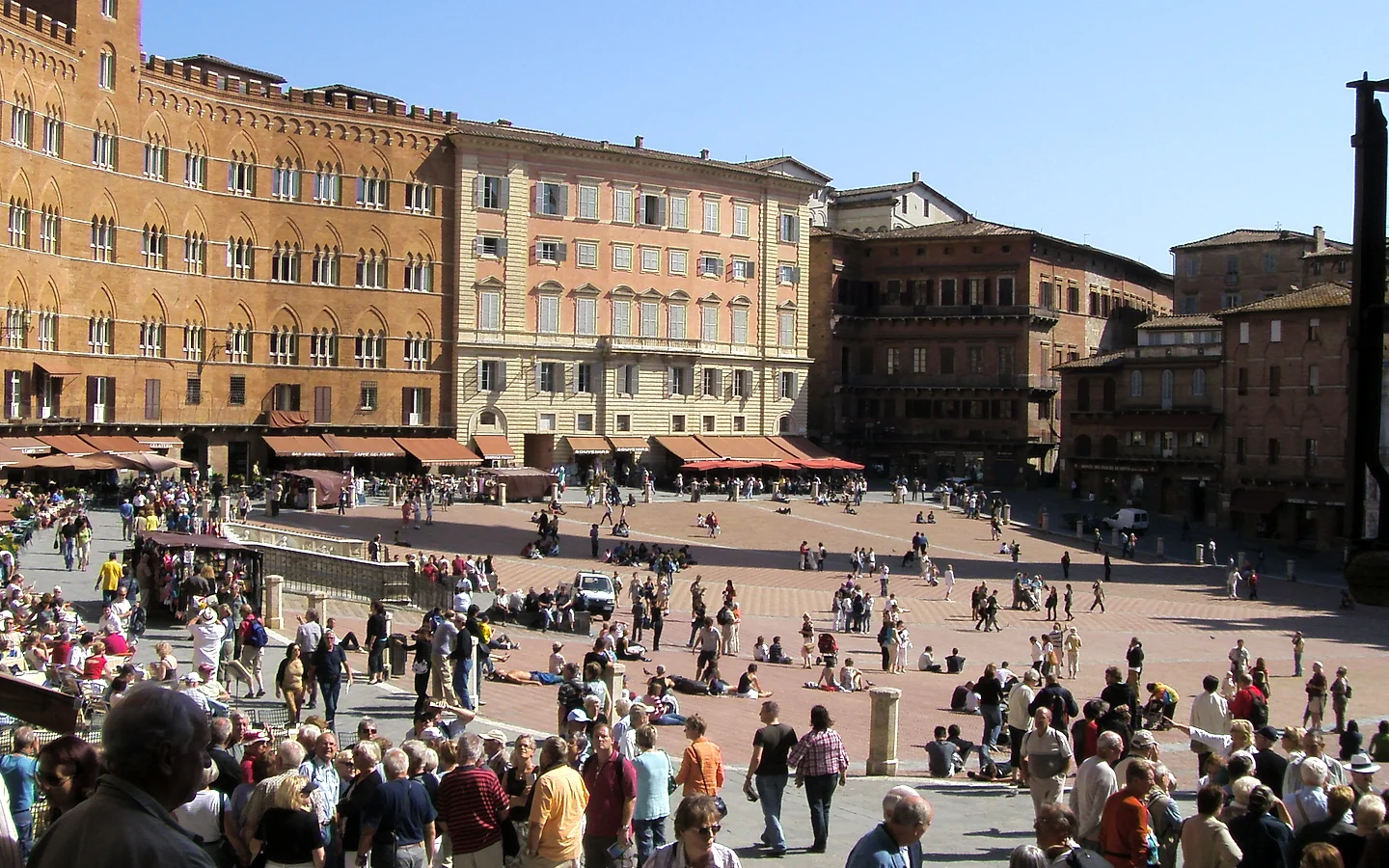
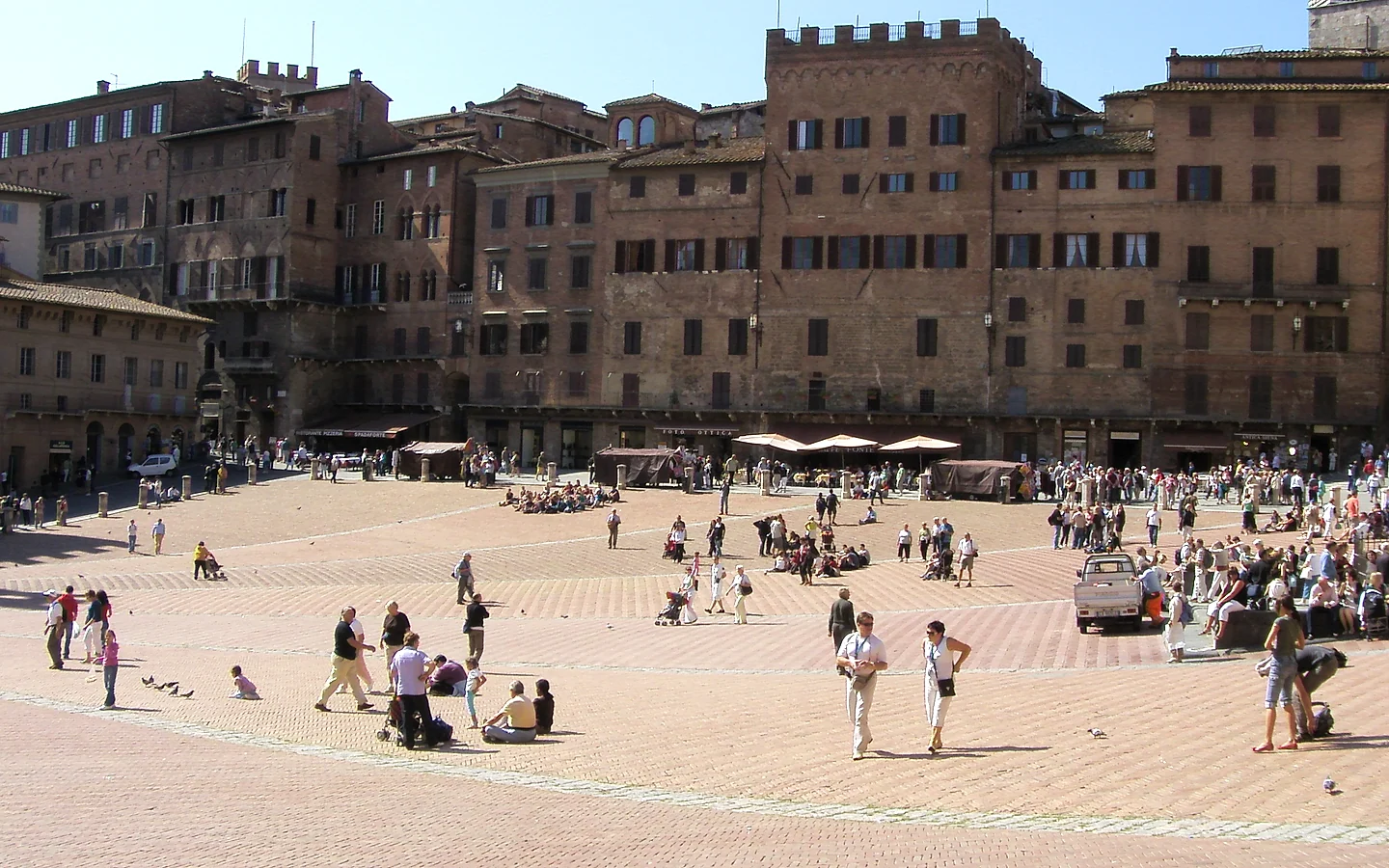
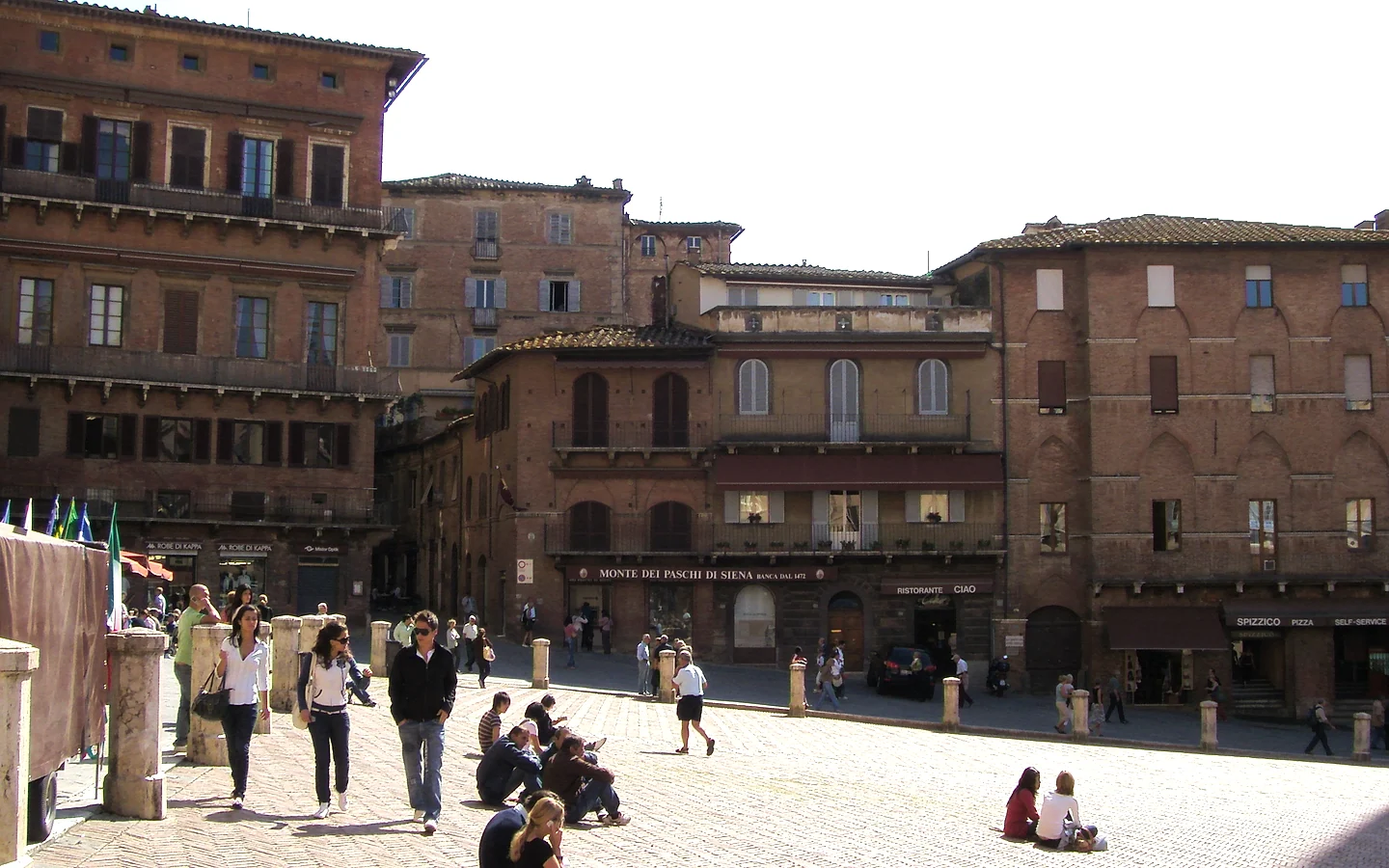
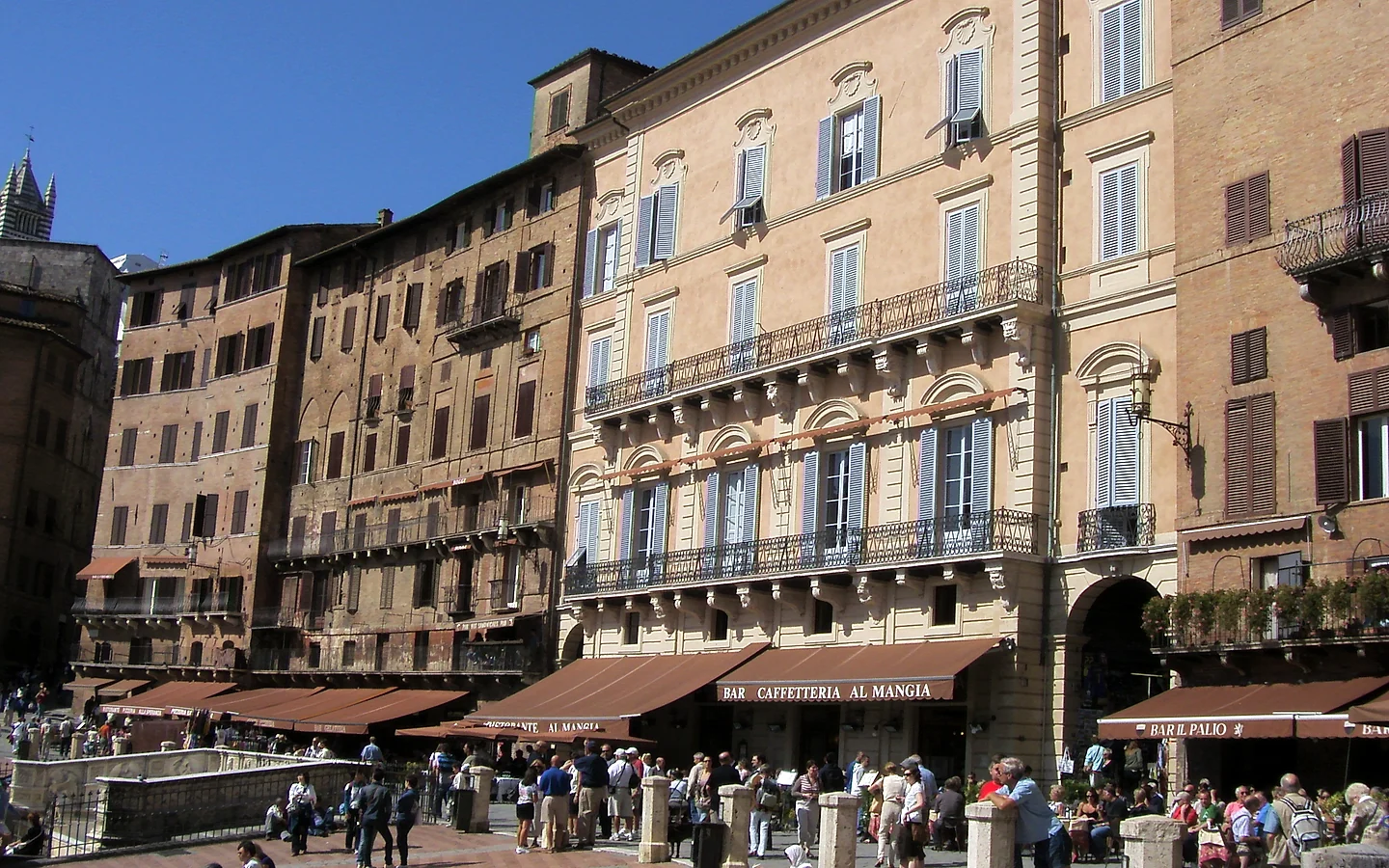
The sloping, shell-shaped square gathers streets, people and public buildings into one unmistakable space. Walk around it as well as looking down from one viewpoint.
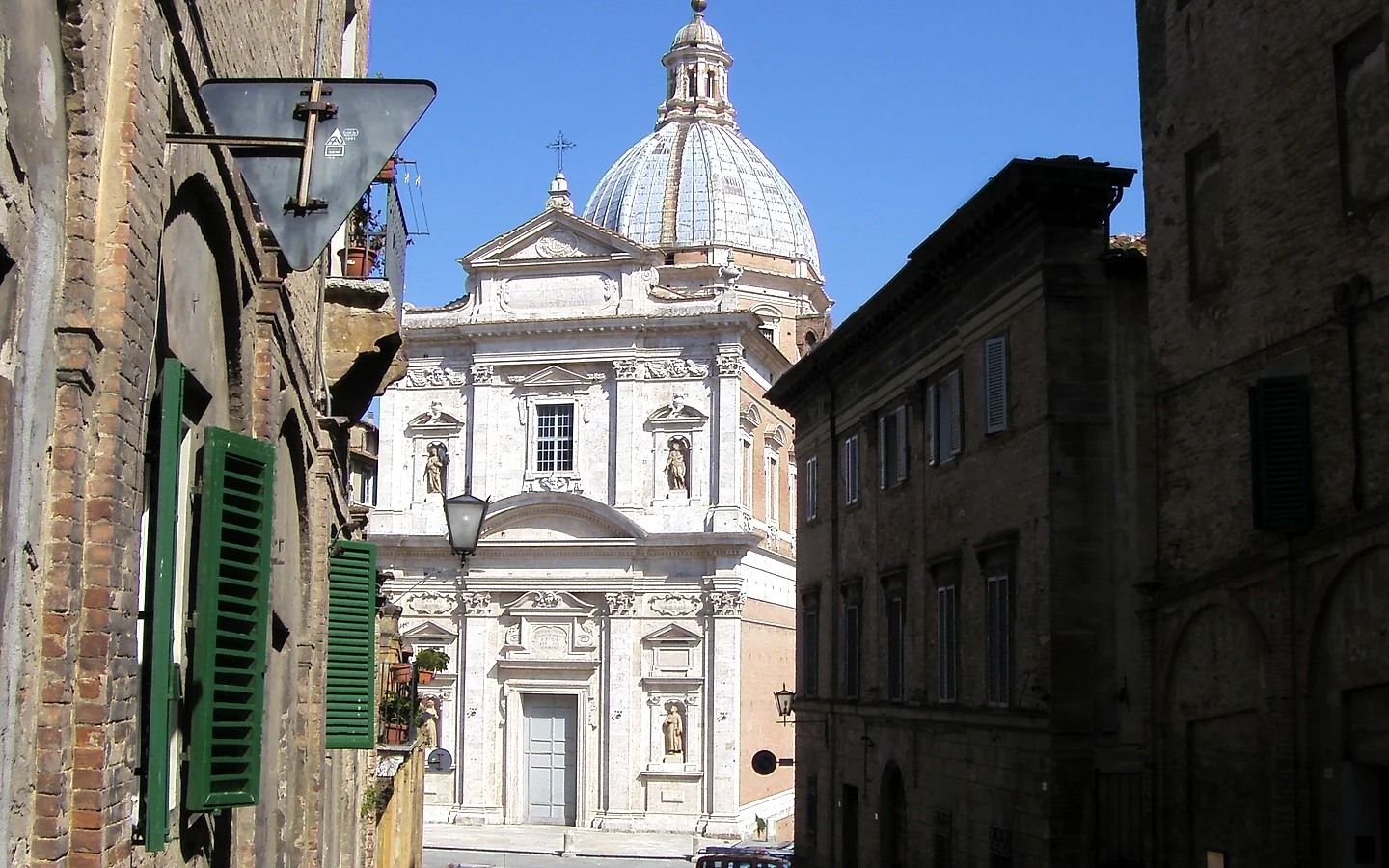
The cathedral, Piccolomini Library, Museo dell’Opera, baptistery, crypt and panoramic elements form a broad complex. Choose the parts that matter and check the current official ticket and opening calendar.
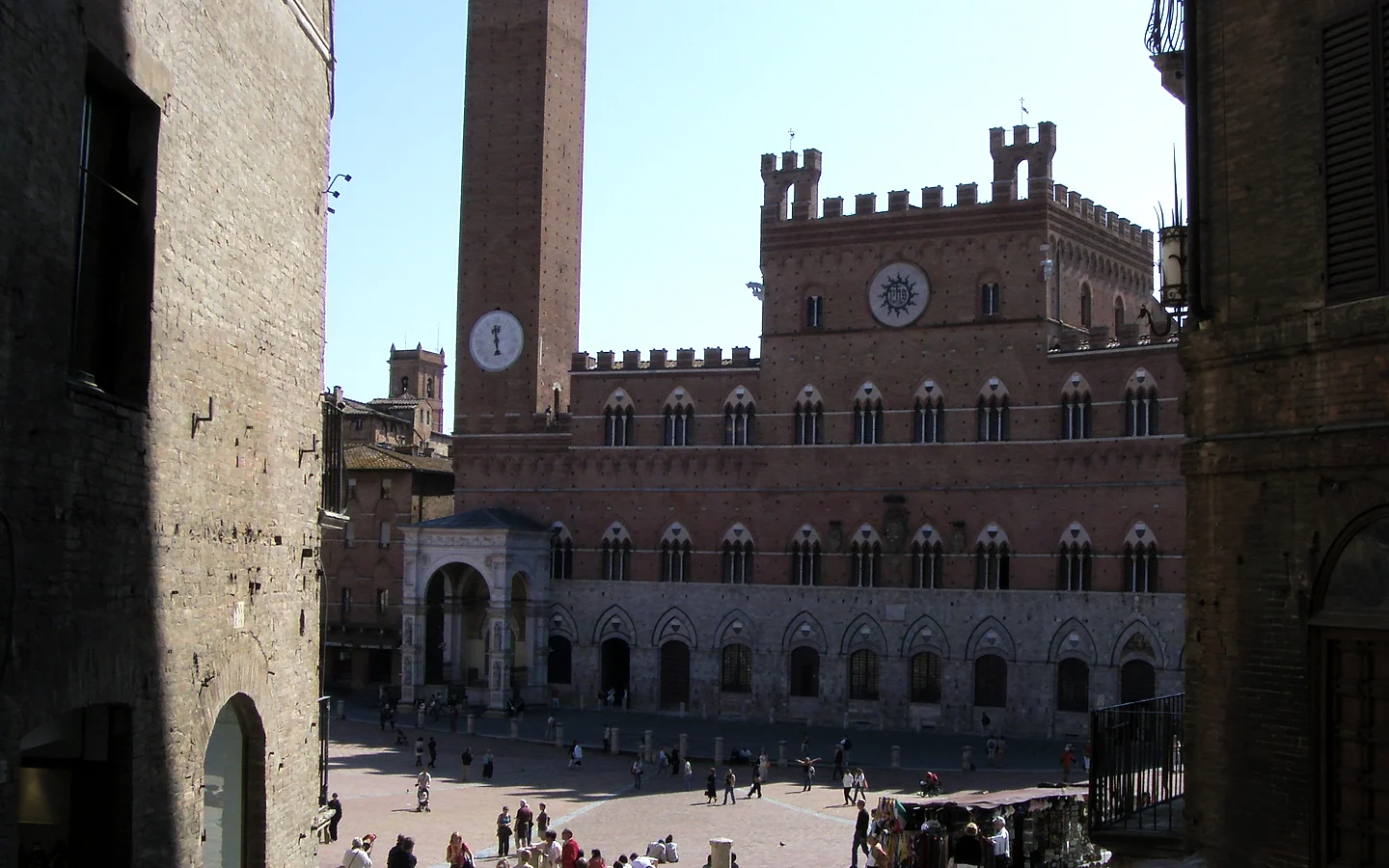
Palazzo Pubblico is still Siena’s town hall and also contains one of Europe’s great civic art programmes. The Good Government frescoes connect beauty with the practical question of how a city should be governed.
The Palio takes place twice during the summer, but its meaning extends far beyond the races into Contrada life throughout the year. On event days expect exceptional crowds, access changes and a completely different kind of visit. Check the current official programme before travelling.
A Siena day with one strong decision
The city is compact but steep and exceptionally rich. Begin with its public heart, choose one substantial interior, then leave time for lunch and the Contrada streets.
- 01Begin with Piazza del Campo
Enter the shell-shaped square on foot and walk its curve before deciding where to sit. Palazzo Pubblico, Torre del Mangia and Fonte Gaia explain the civic scale, while people crossing and resting show that the Campo is still a social place. The official city guide describes it as a masterpiece of medieval urban planning and the stage of the Palio twice a year.
- 02Choose Palazzo Pubblico or the Duomo complex
Inside Palazzo Pubblico, the Museo Civico includes Simone Martini’s Maestà and Ambrogio Lorenzetti’s Good Government cycle; the Torre del Mangia gives a demanding climb and a wide view. The Duomo brings striped marble, the Piccolomini Library, Nicola Pisano’s pulpit and a wider museum complex. Either choice can fill a meaningful part of the day, so book or queue for the one you most want.
- 03Eat something that belongs to Siena
Pici, ribollita, cinta senese and local cured meats suit a proper lunch. For something small, look for ricciarelli, panforte or cavallucci in a bakery. Read the menu, ask what is seasonal and avoid making the meal another race between monuments.
- 04Walk through Contrada streets
Siena’s seventeen Contrade are living neighbourhood communities, not decorative tourist districts. Notice plaques, fountains, flags and emblems respectfully, but remember that community spaces and events belong first to residents. A route toward Fontebranda, San Domenico, Provenzano or a quieter side street reveals a more intimate city.
- 05Finish with one final perspective
Choose Santa Maria della Scala opposite the Duomo if its layered hospital and museum history interests you, or end outdoors near the Fortezza Medicea and its views. Do not add both automatically. The best final stop is the one that still leaves a comfortable return to your car or train.
Let Siena carry your Italian beyond the classroom
Siena gives you useful, low-pressure moments to speak: asking which entrance to use, understanding a bakery counter, checking a bus stop or discussing a painting you have just seen.
Instead of asking what there is to see, ask where a specific room, fresco or entrance is. A specific question is easier to understand and more likely to produce a useful answer.
Ask what a sweet contains, whether it is typical of Siena and how much you need for two people. Ricciarelli and panforte provide an easy starting point without inventing a staged conversation.
Colours and animals identify Contrade on fountains, plaques and flags. Learn one or two names, then listen for how local people refer to streets, gates and neighbourhoods.
A bench, a side street or a coffee gives your mind time to connect words from class with the day. What you notice will stay with you longer than the number of sights you complete.
Keep Siena for a course-free day and travel by car if one is available. The drive is long enough to make an early start worthwhile, but parking at the edge of the centre leaves the rest of the day pleasantly walkable. The train is possible, usually with changes and an onward trip from Siena station, yet it uses much more of the day. In the city, do not try to complete every museum: experience Piazza del Campo, choose either the Duomo complex or Palazzo Pubblico as your main interior, eat something Sienese and leave time for the Contrada streets.
The route, official visitor information, ZTL rules, parking and public-transport links must be checked again before the visit. Driving time excludes traffic and parking; openings, events and temporary restrictions can change.
Choose the journey that suits your day
Car, train and local buses can all be useful. Choose the route that leaves time for the places you look forward to and a comfortable journey back.
The car is the most practical option from Castiglioncello, especially for two or more people. Siena’s historic centre is protected by an active ZTL, so choose an official car park before leaving and use that as the navigation destination. Santa Caterina is useful for the Duomo side and has a direct escalator connection; Il Campo, Il Duomo and Stadio-Fortezza are other official options with different approaches.
- Open the live route from Villa Casa Marina and check traffic before departure.
- Choose an official car park according to your first priority and enter the car-park address, not Piazza del Campo.
- Treat every ZTL sign and camera-controlled gate as a firm boundary unless you have verified authorisation.
- Save the parking level and entrance, then allow time for escalators, slopes or the walk into the centre.
There is no simple direct train from Castiglioncello to Siena. Current journey planners commonly use the coastal line and the Empoli-Siena connection, sometimes with more than one change. Siena station is outside and below the historic centre, so the final bus or pedestrian connection belongs in the travel plan. This is a possible but timetable-led full day.
- Search Castiglioncello to Siena for the actual outward and return date, not a generic weekday.
- Check every change, platform and the amount of connection time before buying the regional ticket.
- Add the journey from Siena station to Piazza Gramsci or the historic centre to the rail time.
- Choose the return before booking a timed monument and leave enough time at Siena station.
Autolinee Toscane line 520 links Siena railway station with Piazza Gramsci near the northern entrance to the centre. Other urban services may also suit the day, but routes and stops can change. This local connection does not replace the long journey from Castiglioncello; it simply makes the final section into central Siena easier.
- Open the current line 520 page and check the station-to-Piazza Gramsci direction.
- Confirm the stop, departure time and ticket method before leaving the station.
- From Piazza Gramsci, continue on foot through the historic centre toward the Campo.
- For the return, allow enough time for the bus or walk back to the station before the train.
What makes a Siena day work smoothly
The distance, hills and restricted centre reward a few firm decisions. Set the route, parking or rail return and one ticketed priority; keep the rest flexible.
The municipal rules describe Siena’s ZTL as active every day, 24 hours a day, with camera-controlled gates. Ordinary visitors should navigate to an official car park and never follow a satnav through a restricted entrance.
Santa Caterina is convenient for Fontebranda and the Duomo side, Stadio-Fortezza for a northern approach, while Il Campo and Il Duomo serve other edges of the centre. Check current availability, height limits, event restrictions and tariffs before departure.
Comfortable shoes and water matter. Piazza del Campo slopes, many connecting streets are steep and towers or museum complexes add stairs. Build in a slower pace during summer heat.
Official schedules and ticket conditions vary across the Duomo, Museo Civico, Torre del Mangia and Santa Maria della Scala. Check the institution directly and leave enough time between timed entries.
Preparations, trials and events affect the city well beyond the races themselves. If your stay overlaps the Palio period, decide whether the event is the purpose of the visit and consult the current official programme before travelling.
Questions about this day trip: Siena
Practical answers for planning independently from Castiglioncello.
Can I visit Siena after morning Italian lessons?
We do not recommend it. The drive is about two hours before traffic and parking, and the train takes longer with changes. Keep Siena for a full course-free day.
Is Siena better by car or train from Castiglioncello?
The car is usually the practical choice, especially for two or more people, provided you park outside the ZTL. The train is possible but generally requires changes plus a bus or walk from Siena station to the centre.
What should I see on a first Siena visit?
Start with Piazza del Campo, choose either the Duomo complex or Palazzo Pubblico as your main interior, have a Sienese lunch and walk through one or two Contrada areas. Add a second museum only if the day still feels relaxed.
Where should I park in Siena?
Use an official car park outside or at the edge of the historic centre, such as Santa Caterina, Stadio-Fortezza, Il Campo or Il Duomo. Choose according to your first sight and check current tariffs, closures and availability on the official parking website.
When is the Palio di Siena?
The Palio is held twice during the summer in Piazza del Campo. Crowd levels, access and transport are very different around the event, so use the current official programme rather than treating it like an ordinary sightseeing day.
Who books transport and tickets?
You arrange the trip yourself and book directly with the transport operator, attraction or other provider. This page helps you prepare.